Sleep safety and materials
Choosing an Organic Crib Mattress: Materials, Fit, and Safe Sleep
A crib mattress is a modest object with an outsized job: it must fit the crib, provide a firm and flat sleep surface, and be made and labeled in ways caregivers can understand. Organic materials may matter to families, but they do not replace the fundamentals of infant sleep safety.
Published October 21, 2026
Preparing for a baby often means comparing an impressive range of claims: natural, breathable, chemical-conscious, organic. A crib mattress can carry several of them at once. Yet the most important questions are less poetic and more practical. Does the mattress fit the crib snugly? Is its surface firm and flat? Can caregivers follow its care instructions without adding soft layers that change the sleep space?
Those checks are central whether a mattress is made with organic cotton, wool, foam, or another material. The word “organic” describes aspects of how certain materials are grown or processed under a defined standard; it does not, by itself, establish that a mattress is safer for sleep, prevent a sleep-related incident, or make a product appropriate for every crib. A careful choice starts with safe-sleep guidance, then considers construction, fit, certification, cleaning, and household needs.
Begin with the sleep surface, not the marketing
For every sleep, place an infant on their back on a firm, flat, non-inclined surface intended for infant sleep, such as a safety-compliant crib, bassinet, or play yard. Keep the sleep area clear: use a fitted sheet made for that mattress and leave out pillows, quilts, comforters, loose blankets, stuffed toys, positioners, and other soft objects. These basics apply to organic crib mattresses just as they do to conventional ones.
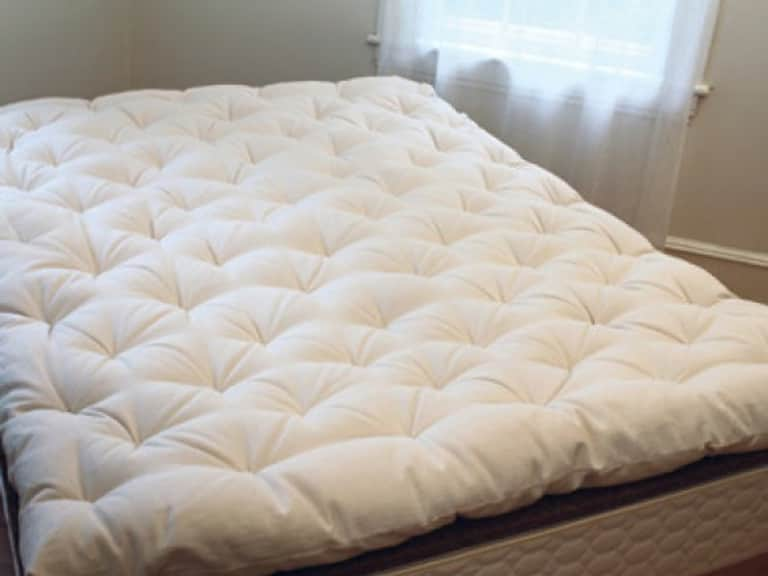
Firmness can feel counterintuitive to adults accustomed to plush beds. A crib mattress should not conform deeply to a baby’s head or body. When pressed, it should return to shape rather than retain a lasting indentation. A soft topper, cushion, or extra mattress pad may alter the surface and introduce hazards, even if it is made from natural fibers or described as breathable. For infant sleep, do not add a topper to make a mattress softer, warmer, or more comfortable.
Follow current recommendations from trusted public-health authorities, including the American Academy of Pediatrics and the U.S. Consumer Product Safety Commission. Guidance and regulations can change, so consult their current resources and the instructions supplied with the crib and mattress. This article offers general information, not a substitute for product directions or advice from a pediatric clinician who knows a child’s circumstances.
What “organic” does—and does not—tell you
Organic claims usually concern specific agricultural materials and the standards under which they are produced or handled. A mattress may contain organic cotton fabric or batting, for example, while its core, adhesives, waterproof layer, thread, or other components are made differently. The term should therefore prompt a closer look at the full bill of materials rather than end the inquiry.
Ask which components are certified, which organization issued the certification, and what the certification covers. A label applying to the cotton cover does not necessarily certify the entire finished mattress. Nor does certification alone confirm that a mattress meets every applicable crib-mattress safety requirement. Read the manufacturer’s documentation and distinguish among agricultural organic certification, chemical-emissions testing, material-content claims, and product-safety compliance. These are related questions, but they are not interchangeable.
“Natural” is also a broad word. It may describe a source material without giving a complete account of processing, treatments, or finished-product performance. “Non-toxic” can be similarly vague unless a company explains the basis for the claim. A transparent maker should be able to identify the materials used, explain the scope of certifications or tests, and provide instructions for use and care. If key information is missing, ask before buying rather than relying on an appealing phrase on a tag.
Compare the complete construction
A crib mattress is a system of layers, not simply a cover or a core. The core determines much of its firmness and support. The cover affects the feel of the surface and how spills or moisture are handled. Batting, barriers, seams, tufting, and any waterproofing can also affect construction and care. Product descriptions that list only the outer fabric leave important questions unanswered.
Core and support
Crib mattresses may use different types of cores, including foam, coils, or natural-fiber materials. No material category automatically guarantees a suitable sleep surface. Evaluate the finished mattress against the crib maker’s specifications and the mattress manufacturer’s age and use guidance. Look for a clear statement that the product is designed for an infant crib, along with applicable safety information and instructions.
Natural fibers such as wool may be valued for their feel and moisture-management properties. Cotton may appear in covers or batting. Other mattresses use foam or innerspring construction. These distinctions can matter for household preferences, sensitivities, durability, or cleaning, but they do not supersede firmness, flatness, fit, and appropriate use. Be cautious about extrapolating from a material’s general properties to a claim about infant safety or health.
Cover and moisture protection
Some covers are designed to resist moisture; others may be less protective and require careful spot cleaning. Ask whether the cover is removable, whether it can be washed, and whether removing it is permitted. A separate waterproof cover or pad should not be added unless the mattress and crib manufacturers specifically allow it and it remains a firm, properly fitted surface. For infant sleep, the simplest arrangement is a well-fitting crib mattress with its intended fitted sheet.
Never assume that a removable cover makes the mattress washable, or that a washable component can be placed back on the crib before it is completely dry. Moisture trapped inside a mattress can contribute to odor or material damage. Follow the exact care label; avoid improvised cleaning products, steam, or treatments unless the manufacturer authorizes them.
Fit is a safety check, not a finishing detail
A mattress must fit the specific crib snugly. A mattress that is too small can leave gaps at the edges; a mattress that is too large may not lie flat or may be difficult to install correctly. Either way, an apparently close match is not enough. Check the crib manual for required mattress dimensions and thickness, then compare them with the mattress label and manufacturer specifications before purchase.
In the United States, full-size crib mattresses are generally subject to standardized dimensional requirements, but “standard size” is not a substitute for checking the particular crib. Non-full-size cribs, convertible designs, older frames, and products sold in other countries may have different specifications. Measure according to the crib manufacturer’s directions, and contact the manufacturer if the manual is missing or the fit seems uncertain.
Once assembled, inspect the space around every edge. The mattress should lie flat and be held securely by the crib frame, with no hazardous gaps. Check that it does not bow, buckle, or lift at the corners. Use only a fitted sheet that is made for the mattress dimensions and stays firmly in place. A sheet that is too loose can bunch; one that is too small can pull away or distort the surface. Do not use extra layers to compensate for a poor fit.
Labels, testing, and questions worth asking
Before ordering, look for the product’s intended use, dimensions, thickness, materials, manufacturing details, care instructions, and any relevant certification or compliance information. Verify the manufacturer and model, and check for recalls through official sources. Keep the receipt, product labels, and manual where they can be found later. If a product listing makes broad claims but gives little detail, seek written clarification.
Useful questions include:
- Is this exact model intended for use in an infant crib?
- What are its finished dimensions and thickness, and which crib specifications should it match?
- Which components are organic or certified, and what does each certification cover?
- What are the mattress core, cover, and any barrier or batting made from?
- How should the mattress be cleaned, and what products or methods should be avoided?
- Does the manufacturer provide current safety and compliance information for this model?
- Is the product subject to any recall, and how can that status be verified?
Certifications can make claims easier to evaluate when their scope is clear. A certification may provide information about fiber origin or processing, while another type of testing may address emissions or a different property. Neither should be treated as a universal seal of safety. Look up the certifier’s own explanation, verify that the model is covered, and avoid assuming that a logo on one component applies to every part of the mattress.
Care instructions shape everyday use
Babies can make messes; a mattress must be maintained within the limits of its design. Some models permit wiping or spot cleaning only. Others may have a cover that can be removed and laundered. Some natural-fiber constructions can be damaged by soaking, vigorous washing, high heat, or harsh cleaners. Read the care instructions before purchase, not after the first spill, and follow them precisely.
Do not cover a mattress with an unapproved pad, plastic sheet, or household material. Do not use a mattress that is wet, damaged, moldy, sagging, or no longer lies flat. If the manufacturer says the item cannot be cleaned adequately after a particular kind of contamination, follow its guidance about discontinuing use. Never place an infant on a surface that has been altered from the manufacturer’s intended configuration.
Secondhand mattresses deserve special scrutiny. Their history may be unknown: they may have been stored damp, exposed to smoke or pests, cleaned with unsuitable products, or used with a different crib. Check for damage, correct dimensions, a readable model label, and recall status. A mattress that looks clean is not necessarily in sound condition, and a replacement should still match the crib precisely.
Organic materials and family priorities
Families may choose organic materials for environmental, agricultural, or personal-preference reasons. Those priorities are legitimate, but they should be weighed alongside performance and safety information. A higher price or longer list of natural materials does not automatically mean a better fit or a safer sleep setup. The right comparison is between complete products, their documented construction, their instructions, and their compatibility with the crib.
For caregivers concerned about allergies, skin sensitivity, or a particular exposure, discuss the concern with a qualified health professional and ask the manufacturer for precise material information. “Hypoallergenic” does not mean that a reaction is impossible, and no general product description can diagnose a child’s sensitivity. Keep the sleep surface uncluttered regardless of the material choices beneath the sheet.
Common buying mistakes to avoid
- Choosing by label alone. Organic content does not establish fit, firmness, or compliance. Evaluate each independently.
- Assuming all cribs use the same mattress. Confirm the exact dimensions and thickness specified by the crib maker.
- Adding a topper for comfort. A soft or extra layer can change the intended infant sleep surface. Use only the mattress and a fitted sheet.
- Confusing breathability claims with safety guidance. Marketing language does not replace a firm, flat surface and an empty sleep space.
- Ignoring cleaning limitations. A mattress that cannot be cleaned in the way a household needs may be impractical; understand the care rules first.
- Relying on vague assurances. Ask for the exact model’s documentation, certification scope, and care instructions.
A practical checklist before the first sleep
Before using a new mattress, confirm that it is intended for the crib, matches the crib’s stated dimensions, and lies flat without gaps or buckling. Review the product label and manual, check recall information, and follow the manufacturer’s assembly and care directions. Use a fitted sheet sized for that mattress—nothing else on the sleep surface. Place the baby on their back for sleep and keep the crib clear of soft objects and loose bedding.
These steps may sound plain beside a marketplace crowded with elaborate claims. Their plainness is the point. A mattress can be thoughtfully sourced and made from certified materials, yet the basic safety questions remain the same: Is the surface firm and flat? Does it fit the crib? Is it being used exactly as intended?
The bottom line
Choosing an organic crib mattress is an exercise in separating meaningful details from reassuring language. Compare the entire construction, verify what certifications cover, and read the care instructions. Then make the non-negotiable checks: a snug fit in the crib, a firm and flat surface, and a fitted sheet with no added layers or loose items.
Organic materials may help a family express its priorities, but they are one part of a larger decision. A careful buyer does not ask only what a mattress is made of. They ask whether it fits, how it is maintained, what the label actually certifies, and whether the sleep setup follows current safe-sleep guidance. That is a more grounded way to welcome a new sleeper—and a more useful standard for any crib mattress.
This article is for general educational purposes. For current infant sleep recommendations, consult authoritative public-health guidance and the product instructions for your crib and mattress. Contact a pediatric health professional with questions about an individual child’s needs.